
Decarbonization as Diplomacy
Movements on the Canadian carbon policy front have been fast and furious, especially over the last two weeks, with these two most significant items:
BC and Canada agreeing to a Cooperative Prosperity Agreement, including compensation for the change in industrial carbon price (and helping BC to an extent retreat from its current giant fiscal hole), and most importantly, the seeding of a ‘National Carbon Credit Framework’ (do fragmented carbon markets count as an ‘interprovincial barrier’, and is this on the agenda for Premiers meeting next week in Charlottetown?)
Alberta putting forwards its proposal for a fast-tracked West Coast Oil Pipeline to the federal Major Projects Office alongside the signing of a trilateral MOU between Canada, Alberta, and the Oil Sands Alliance members to move forwards on the significant Pathways CCUS project, building on the agreement earlier this year to align on an industrial carbon pricing path to 2040
There are plenty of other moving parts on parallel tracks to these, and under the surface as well (federal CFR, BC LCFS, AB RFS). It’s all pretty intricate, and often, intertwined. And all of them have everything to do with how bankable decarbonization projects can get built, i.e. the credit stack.
If we can get all of these pieces to work together - and PM Carney, more so than anyone, seems very inclined to make it work - there is still his own tacit admission in the Forward Guidance video published at the end of June that Canada will not meet its near term Paris Agreement targets. But this doesn’t mean a full-scale abandonment of decarbonization.
This government wants to enhance trade and investment, looking east to Europe, and looking west to the Asia Pacific region. The fact that a significant Canada submarine procurement competition took place between European (Germany-Norway) and Asian (South Korea) partners underlines this. The government has emphasized that it wants Canada to be seen both as a conventional and clean energy ‘superpower’.
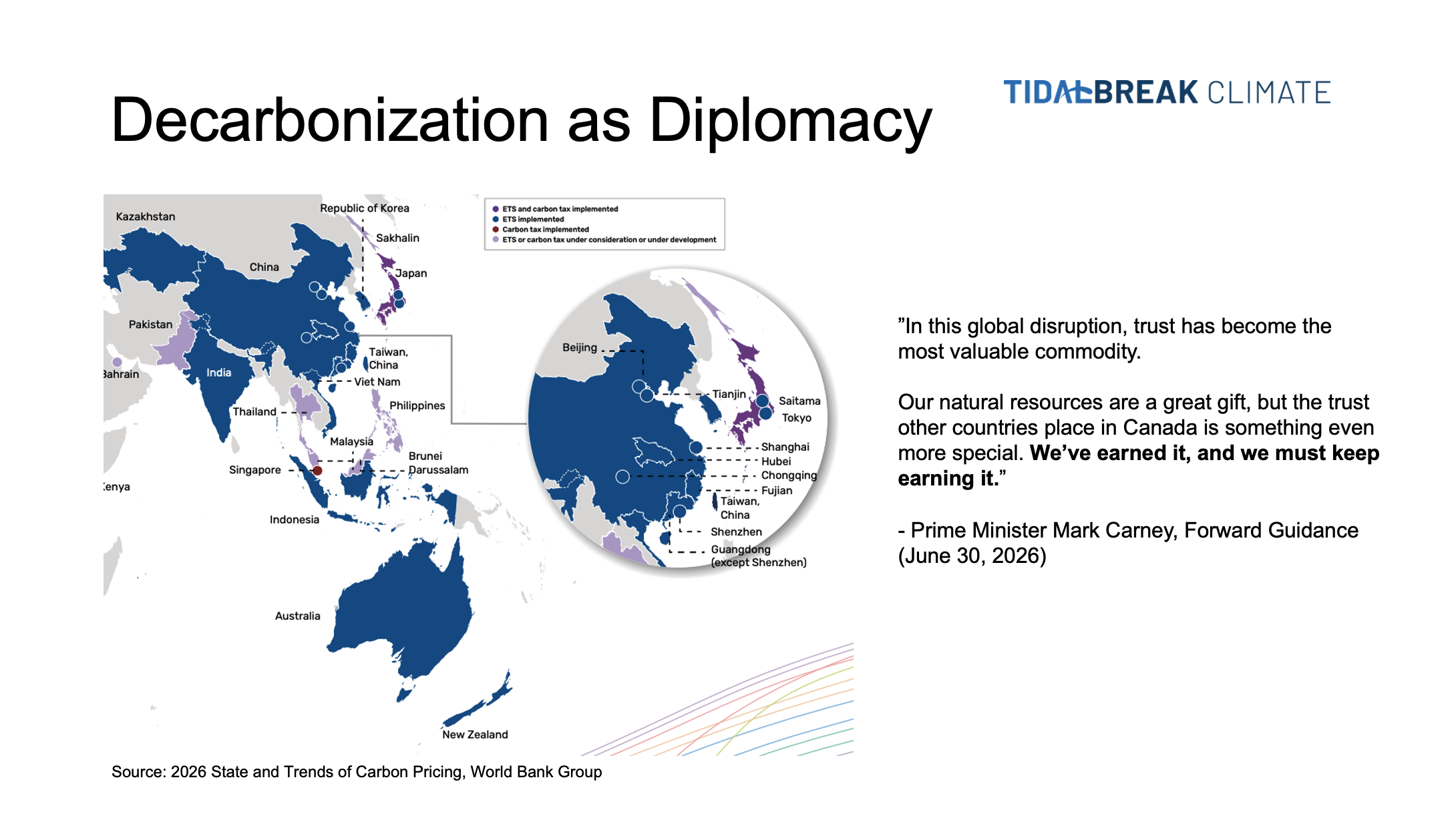
I had the chance to speak briefly at the International Emissions Trading Assocation’s Carbon Market Round-Up in Calgary in early July. Canada should be setting the stage to export Canadian clean technology products and expertise into the Asia Pacific region (among others). The map, for context, illustrates carbon markets existing and under development in APAC. There is international policy infrastructure being built right now that would not only help strengthen Canadian businesses’ presence abroad, but could also help us accelerate the deployment of decarbonization projects and achieve our targets.
Because at the end of the day, isn’t that the point?
