
1 Year of Tidalbreak
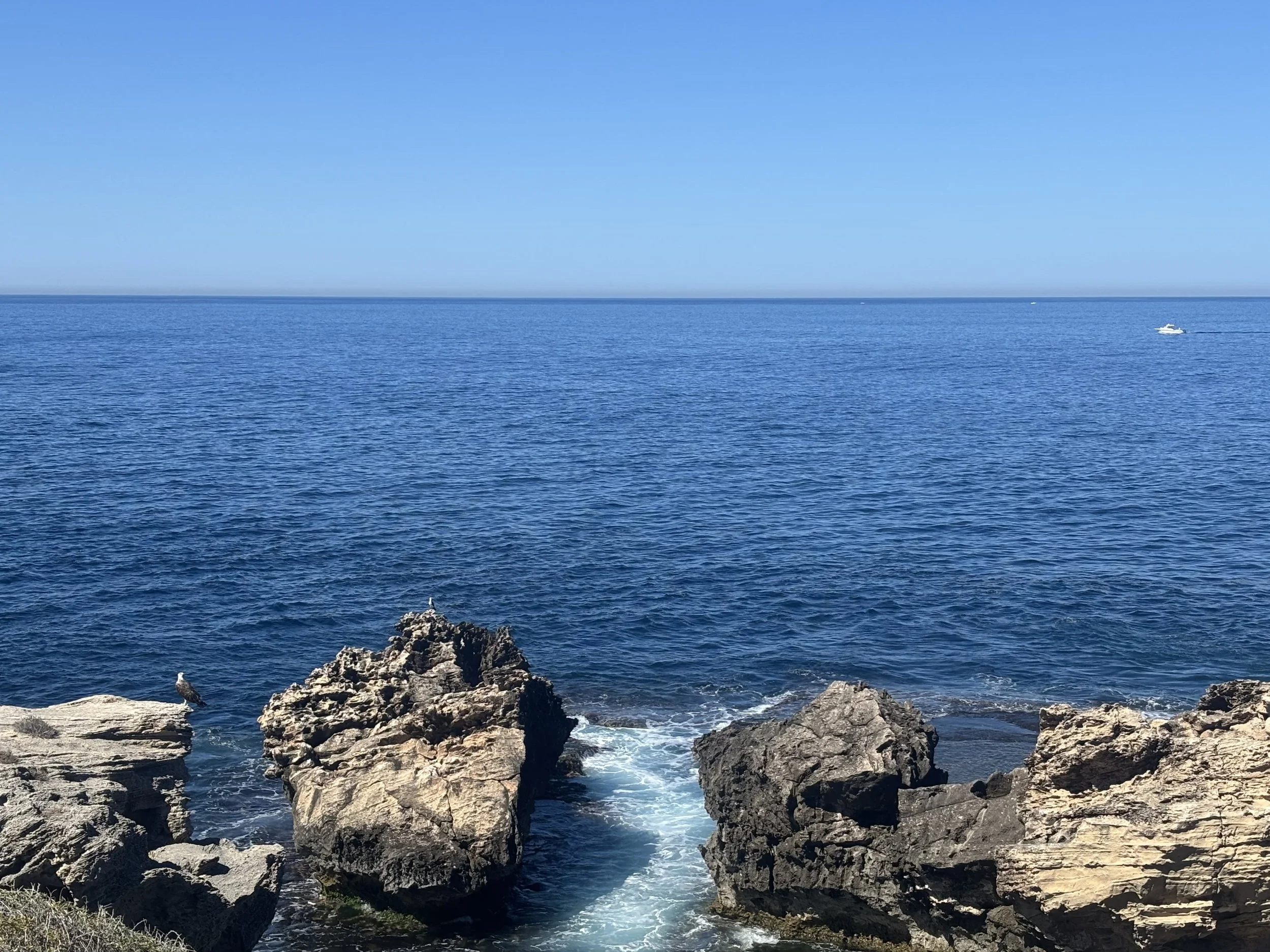
A year ago this week, I stepped back on to Canadian soil after almost 6 months wandering around Asia and Oceania. That landing back in Vancouver effectively marked the start of Tidalbreak.
It had never been my intention to start something up of my own, and arguably it wasn’t the greatest time to do so. I simply knew that I owed it to myself to try and see if I could do it, knowing that I tend to have across-the-aisle, across-the-country, and to an extent, beyond-the-country types of perspectives on issues material to climate and to Canada. I’ve described it as being equally comfortable talking through – technically and strategically – the same decarbonization issues to:
an energy company executive in Calgary,
an activist at a protest in Vancouver,
a worker on shift at a gas plant in the Montney region,
an international diplomat in Singapore, and
a bureaucrat and their political leaders in Ottawa.
Oh, Geopolitics
A year ago, decarbonization had fallen in terms of global priorities especially to the economic anxiety precipitated by the tariffs imposed by the federal US government on many of its international trading partners, including, of course, Canada.
At the same time, we in Canada were placed on a strange political road, where the governing Liberals led by Justin Trudeau hastily replaced their stepped-down leader with technocrat Mark Carney in time for an election against the heavily-favoured-to-win Conservative Party, led by populist Pierre Poilievre. The Conservative Party had threatened to effectively erase any significant federal decarbonization policies and succeeded politically at least on one. This election then resulted in a Liberal minority government just shy of a majority led by Mark Carney.
Blurred Lines – Energy Security and Decarbonization
Over the last year, energy security has very much taken up one of the front seats of global priorities, and rightfully so, as it’s tightly wound around defence. That prioritization has only strengthened since the US and Israel started their war with Iran.
It would be a mistake to say that decarbonization isn’t relevant anymore. It’s still there – just below the surface. Energy security, after all, can look to many regions like localized energy production and generation – whether that’s for electricity akin to solar and storage, or liquid fuels produced from local feedstocks. It can and does look like diversification of energy sources and supply chain partners. And yes, conventional energy – oil and gas including LNG – does play a role in that too. In Canada to an extent, but beyond, much more. A tonne of carbon is very much a traded commodity today, and that crosses all energy sources.
The Role of Policy
The macro decarbonization policy landscape – which federally in Canada largely means industrial carbon pricing and Clean Fuel Regulations – helps achieve tandem decarbonization and energy security goals. For Canada, they are designed to reduce emissions while enabling economic production to prosper; internationally, they help in building bridges with partners – especially with those in Europe and in Asia. Prime Minister Carney’s done several rounds of international trips to build goodwill with those partners with a goal of strengthening the diversity of trade relationships. Many of those same partners – and it’s in the readouts themselves of those meetings – have an expectation of decarbonization action taking place where policy sets the foundation.
These federal policies then have reflections in provincial and territorial roles in the federation. This is why I’m keeping close tabs on the narrative and on-the-ground implications of the legal Cowichan Tribes and Gitxaala decisions (uncertainty which could further deteriorate the investment climate, especially in BC), the MOU between Canada and Alberta on energy issues (which will hopefully provide a runway for decarbonization projects to reach FID), and how some provinces have responded to tariffs with so-called bans on importing US products including low carbon fuels (more to come on this, pending the amended CFR).
The Road Ahead
Within the last week, we’ve seen Mark Carney’s Liberal Party regain a majority in the House of Commons, prompting expectation of the next election to very likely be 2029, three years from now.
It’s a long road we have to go – for Canada, and for decarbonization – and I’m here to keep us to it.
