
Re-orienting the Decarbonization Story
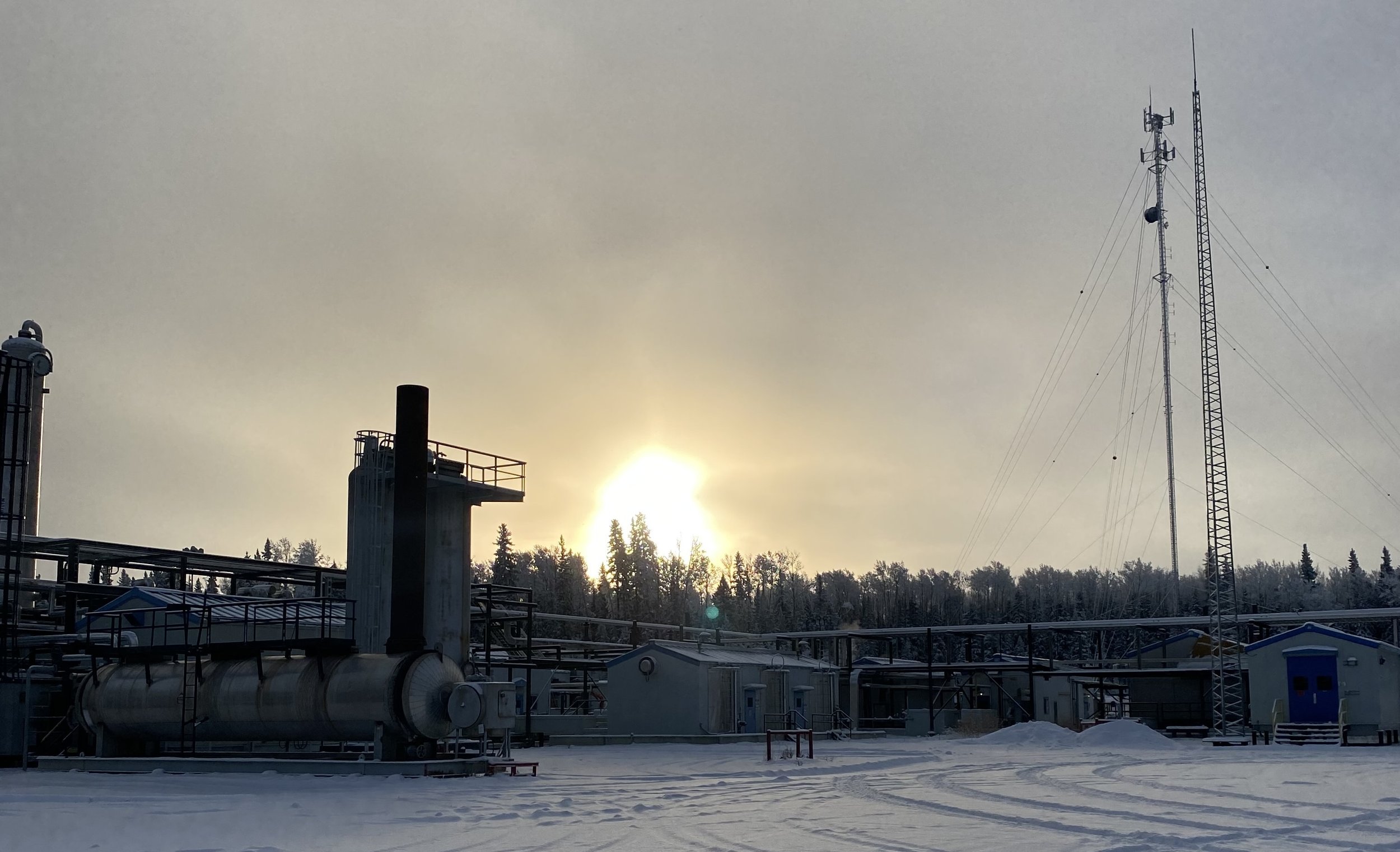
Energy Infrastructure, somewhere in northern British Columbia
In the middle of the summer last year, I’d written about the potential effects on energy pricing due to what ended up being a 12-day war in June including Israel, Iran, and the United States. It turns out I was maybe a little too early.
As of this writing, following Israel and the US starting an air assault on the Iranian regime over the weekend, benchmark Brent crude prices are trading close to $77/bbl, having jumped roughly 8% from pricing on Friday. The Strait of Hormuz, a key shipping corridor for nearly a fifth of the world’s oil supply, has been disrupted, as have several producing oil and gas fields and refineries in the Middle East.
There is no clear anticipated next leadership of Iran, definitively not from a democratic or even quasi-democratic standpoint. This is important, as President Trump has stated a few times his expectation of similarities to a Venezuela-like situation, where if the existing leader is taken out, one more amenable to US demands will take their place. Reportedly, he was repeatedly advised of clear differences in the two cases. Of further importance, no US or Israeli officials have suggested a timeline for the end of this conflict, shy of a ‘roughly four weeks’ coming from President Trump.
What does any of this mean for Canada?
Mark Carney’s government (and in particular, his foremost lieutenant on energy issues, Tim Hodgson) will continue to tout Canada to Europe and Asia as a reliable, stable, environmentally responsible supplier of energy, whether it’s oil, LNG, or critical minerals. They’ll be right, and in a sense, righter than ever. Whether or not buyers will be willing to pay a premium (and on what contract length terms) for it is the key question.
Domestically, there will be reinvigorated calls to expedite energy export facilities, and build new ones, like a new oil pipeline, central to the Canada-Alberta MOU signed in the fall. However, as recently as two weeks ago, one of the top contender private proponents, Enbridge, suggested they weren’t interested, as their CEO Greg Ebel clearly has a good memory of the $600 million loss the company incurred on the Northern Gateway project. TC Energy likely looks at things similarly due to the history of the Energy East project. At this point in time, it looks more likely that Keystone XL will be revived than a pipeline being built in Canada.
Decarbonization is woven into this – as a strategic advantage, a premium added to pricing, and a policy question mark. If (and a gargantuan if, at that) a private proponent is able to be secured at the table to front a pipeline, Canada and Alberta can agree on an industrial carbon pricing framework, and the Pathways Plus project can move forwards, Canada can strengthen its standing to sell its conventional energy products, especially across the Pacific.
It’s worth noting that even in today’s muddled geopolitical world, it was my observation speaking to members of the Asian business community a few weeks ago that decarbonization action and investment is embedded and expected in the continent. I understand consternation around the term ‘decarbonized oil’ but I do think an accurate term for where Canada could land would be ‘low carbon oil’. There is precedent there in Canada (well, for gas), with Woodfibre LNG’s net zero commitment from project start (full disclosure: I led the development of that strategy).
The certainty that had been expected in a (relatively) peaceful world to address climate change as the foremost challenge of our time has been shattered, not just over the last year, but over the past decade. The story needs to adapt.
